
Can a Canadian Citizen Get a U.S. Mortgage?
Learn about options to help Canadians purchase and finance properties in the United States.
Imagine waking up to the Florida sun, sipping coffee on your balcony overlooking the Gulf Coast or the Atlantic Ocean. Or perhaps, you would like to be skiing down the Rockies in Colorado on a crisp winter morning, or enjoying a day in L.A. coming from your California home. In any of these scenarios, there are are some steps that need to take place first.
Owning a home in the U.S. is a dream for many Canadians, whether it’s a seasonal getaway, a retirement spot, or an investment property. An important question that will arise for many Canadians is if obtaining a mortgage in the U.S. is possible when purchasing property in the states.
The good news is there are options. The path may be a bit different for a Canadian citizen and here is the additional information you will want to know to help you through the process.
When the Canadian dollar is strong, more Canadians buy in the U.S.
Canadians are among the top foreign buyers of U.S. real estate. Below are interesting statistics and findings according to the National Association of Realtors:
Canadians account for nearly 10% of all foreign home purchases in the U.S.
In 2022, Canadians spent more than $5 billion USD on U.S. homes, with Florida, Arizona, and California topping the list.
The majority of these buyers are retirees or “snowbirds” seeking seasonal homes, but younger Canadians are increasingly buying for investment or remote work flexibility.

For example, a Canadian investor recently purchased a Miami property with no income verification. Through a unique program designed for foreign nationals, a Canadian citizen who may own a property in Canada, can purchase a property in the U.S. for investment purposes and put down as little 20%.
This can vary depending on the property and circumstances. To explain a bit further, the U.S. has certain mortgage rules pertaining to condos vs single family dwellings. A house in the U.S. may require less of a down payment than a condo, and this is especially true when considering a Florida condo.
Many Canadians like to come to Florida for enjoyment during the cold, winter months up north and appreciate the warmth that Miami, Naples, Sarasota, Orlando or Fort Lauderdale may bring them. Other Canadians have purchased properties in the U.S., rented them to tenants and enjoyed the cashflow they bring. If they purchased many years ago, they may see quite a nice appreciation in their properties as values in the U.S. have increased.
According to the National Association of Realtors (NAR), Canadians accounted for about 9 to 10% of all foreign home purchases in the U.S. in recent years.
National Association of Realtors
An example, is Toronto couple who purchased a home in Sarasota. Since the husband obtained a working visa for his job in the U.S., he was able to qualify for a traditional home loan. If you fall into this category, there could be additional options including as low as a 3.5% or 5% or 20% down payment option for a single family home. Again, if its a condo, especially a Florida condo, it generally requires a bit more down payment.
Many Canadians would rather obtain a mortgage in the U.S. rather than having to convert their Canadian dollars into U.S. dollars and pay all cash for their home. That could be an option for some individuals, but speaking to a U.S. mortgage broker would be recommended. Then, you'll have a better idea of your options to see if financing is a realistic possibility and what it entails.
For savvy investors, financing is often a common theme. Why purchase one property with all cash when you can potentially purchased two or three U.S. properties? For example, a special cashflow program that is popular with U.S. investors can also be utilized by Canadian investors.
The program can allow you to purchase multiple properties with no income verification. The loan underwriter will be more concerned about the potential cashflow that will be derived from the property to justify the loan. This program alleviates any need for income related documents as they will not be requested here. For this specific program, you would only need the following:
Valid passport and proof of citizenship
Credit history where either Canadian credit or U.S. credit can potentially be used
Down payment of 20–30% (higher for investment properties).
Asset verification
According to data from the Federal Housing Finance Agency (FHFA) and the S&P/Case-Shiller U.S. National Home Price Index, over the past 20 years (2006–2026), U.S. home prices have roughly doubled with about 5–6% average annual appreciation.
A $200,000 home in 2006 would be around $400,000 in 2026 on average. Now, in some areas that have grown tremendously such as Miami, FL, the appreciation could be significantly more. It's no wonder why so many Canadians want to buy properties in the U.S. With a growing economy, population and demand, foreigners including residents of Canada strive to own a piece of America.

If you are interested or considering buying property as a Canadian citizen and would like to obtain a U.S. mortgage, contact us to discuss your options.
Mortgage Insight:
Purchasing a Home with a Conventional Loan
VA Loan Success Story with Eric and Denise
How a VA Loan in Ocala, FL changed a Family's Financial Future
Can I Use My VA Loan in a Chapter 13 Bankruptcy?
Can a Fiance or Kids be on a VA Loan?
Veterans Who Buy Homes See Far Higher Net Worth Than Renters
How Much Mortgage Insurance Can I Save with a VA Loan?
Duplex Property in Fort Lauderdale Quadruples in Value and Leaves a Nest Egg to the Heirs
How a California Remote Worker Obtained a Mortgage to Relocate to Boca Raton, FL
What's the Average Mortgage in Fort Lauderdale, FL?
What Factors are in my Credit Score for a Mortgage?
What Documents Do You Need for a No Income Verification Mortgage?
Restaurant Owner Obtains Self-Employed Home Loan
Can a General Contractor Obtain a No Income Verification Mortgage?
Is a HELOC or a Cash Out Refinance Better to Pay for a New Roof?
Can a Collection Prevent Me from Getting a Mortgage?
Do I Have to Make Mortgage Payments if I Lose My Job?
How to Rent Out Your Investment Property
How Private Money Works in Real Estate Investing
What Portion of a Mortgage Payment Goes Towards Insurance
How Much Cash Can I Take Out of My Home?
Top 5 Purposes for a Cash-Out Refinance
Is My VA Disability Income Enough for a VA Loan?
Can I Use a VA Loan More Than One Time?
Helping Renters Build Credit with These 4 Strategies
How to Get a Mortgage Pre-Approval Letter
What Fannie Mae’s Crypto Move Means for Homebuyers?
Can a Canadian Citizen Get a U.S. Mortgage?
What to Know When Purchasing a Duplex with a Mortgage
Can Refinancing Your Car Help You Qualify for a Mortgage?
How Business Owners Can Qualify for an Interest Only Home Loan?

Your mortgage journey.
Various loan type options including:
Conventional loan
FHA loan
VA loan
Self-employed loan options
No income verification for investors
Benefits of Homeownership
Homeownership is a significant milestone and a decision that offers many advantages. In addition to providing a place to call your own, owning a home brings financial stability, personal fulfillment, and a sense of belonging. Mortgage Group has been helping individuals and families obtain homeownership, guiding them through the process and obtaining referrals to help their family and friends accomplish the same.

Purchase
Get pre-approved to purchase your first home, second home or upcoming investment property.
Refinance
Own a property and interested in lowering your payment? Need to take cash out? Refinance with confidence.
Connect with Us
Our experienced team with be happy to speak with you, and walk you through each step of the process.

Providing mortgage solutions to help you with your home.
Mortgages can be complicated and have many moving parts. Let our team help you!
Contact Us
It only takes a few moments to reach out and have an initial conversation.
Know the Next Steps
Our team will work with you to find the best way to achieve your home loan goals.
Find Your Home and Get Your Loan
Our team will be prepared to move with the next steps once you have secured your home purchase contract.
Houses
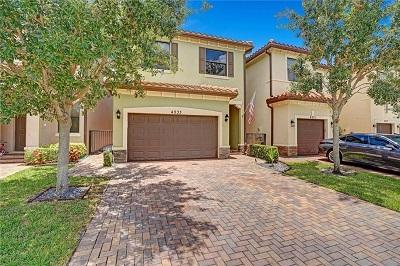
Townhomes
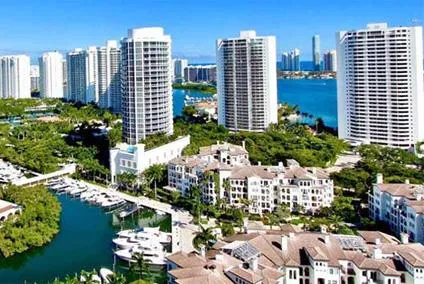
Condos
Multi-Units




Contact our team today.
1-800-583-5305
© Copyright 2026 E Mortgage Capital, Inc.. All rights reserved.
- 1416824 | E Mortgage Capital, Inc.
Notice To Texas Loan Applicants: Consumers wishing to file a complaint against a mortgage banker, or a licensed mortgage banker residential mortgage loan originator, should complete and send a complaint form to the Texas Department of Savings and Mortgage Lending, 2601 North Lamar, Suite 201, Austin, TX 78705. Complaint forms and instructions may be obtained from the department’s website at www.sml.texas.gov
A toll-free consumer hotline is available at 1-877-276-5550. The department maintains a recovery fund to make payments of certain actual out of pocket damages sustained by borrowers caused by acts of licensed mortgage banker residential mortgage loan originators. A written application for reimbursement from the recovery fund must be filed with and investigated by the department prior to the payment of a claim. For more information about the recovery fund, please consult the department’s website at
www.sml.texas.gov